Safe cutting methods matched to the site
We choose between felling, sectional removal, and rigging based on available drop zone, targets, tree condition, and access for hauling and equipment.
Serving Cincinnati, Ohio & surrounding areas
Here for you 24/7
When a tree becomes a risk or a project you cannot handle alone, our crew plans the cut, protects your home and yard, and leaves the area clean and usable again.
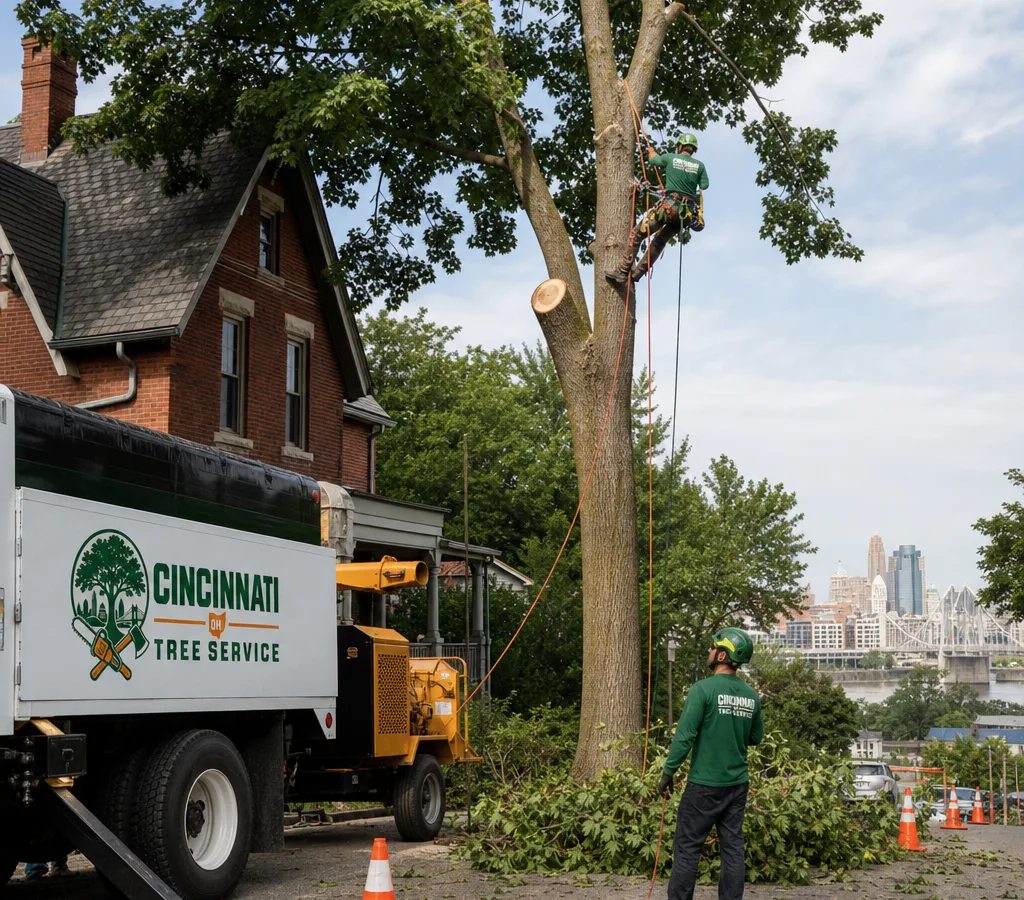
If you are searching for a tree cutting service Cincinnati property owners can rely on, you are usually dealing with one of two problems: a tree is creating a safety concern, or it is in the way of something you need to do with your property. Either way, cutting a tree is not just running a saw. It is a controlled removal that accounts for lean, weight distribution, overhead hazards, drop zones, and what happens to every piece once it is on the ground.
Cincinnati OH Tree Service handles tree cutting with a simple goal: remove the tree safely while keeping collateral damage off the table. That means planning the direction of fall when a felling cut is appropriate, using sectional dismantling when space is tight, and rigging down limbs and trunk pieces when there are targets like roofs, fences, garages, landscaping, or neighboring property.
Cincinnati's mix of older lots, mature trees, and tight access in many neighborhoods often rules out a straightforward “fell it and buck it” approach. We take time to walk the area, identify hazards—including overhead lines and soft ground—and choose the method that fits the site. For a broader view of what we handle across the metro, you can also look at our tree services in Cincinnati, Ohio and then focus the conversation on tree cutting when you reach out.
We choose between felling, sectional removal, and rigging based on available drop zone, targets, tree condition, and access for hauling and equipment.
Work zones, landing areas, and haul paths are planned so limbs and rounds come down where they should and cleanup does not tear up the yard.
You get a written plan for what is being cut, what is being hauled, and what remains—for example, leaving firewood on site if requested.
Brush, logs, and debris are handled as part of the job. We rake, blow off hard surfaces, and leave the area ready to use.
Back yards with gates, slopes, and close structures are common around Cincinnati. We plan the removal so material moves efficiently without damage.
Most tree cutting projects succeed or fail in the planning stage. Our project review focuses on what could go wrong and how to prevent it.
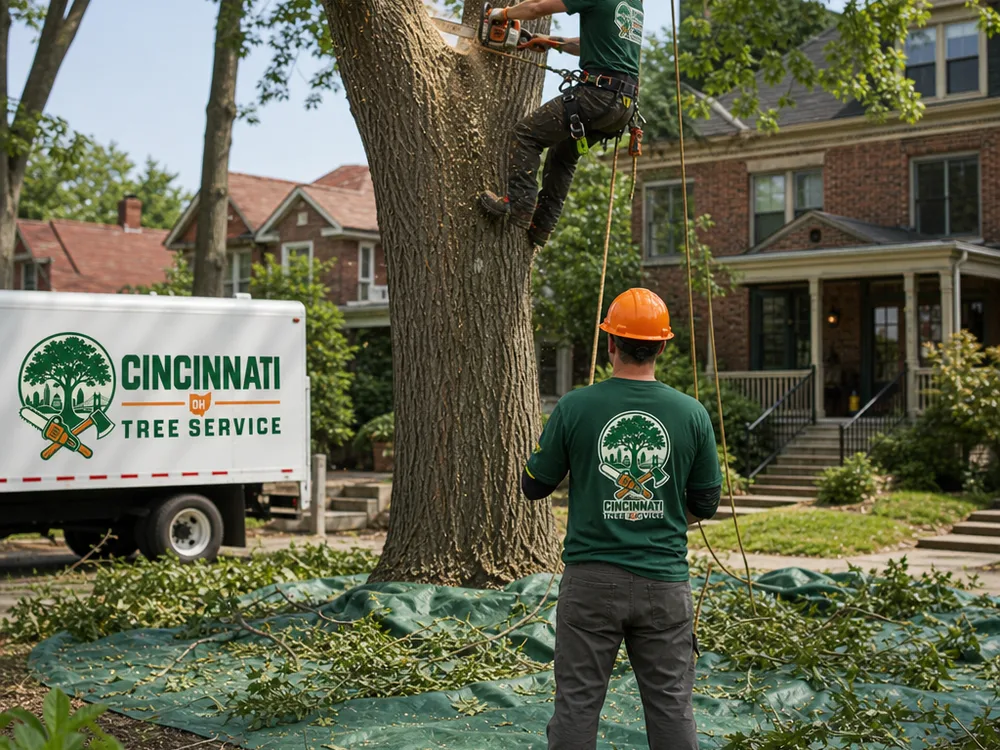
We look at lean and load, deadwood, cavities, and where the canopy is overhanging. Then we map targets like roofs, vehicles, patios, fences, and neighboring structures. In neighborhoods with tighter setbacks, the safest approach is often to dismantle the tree in sections, lowering limbs with ropes and friction devices rather than letting pieces free-fall.
Utilities matter too. If you have overhead service lines near the work area, we treat them as a hard boundary. In many cases the plan is to rig pieces away from the lines, reduce the canopy first, and work in small, controlled cuts. If a tree is in contact with lines or you are unsure what is energized, the next step is to pause and coordinate the job around the hazard rather than “working around it.”
Weather and ground conditions in southwest Ohio can also change the plan. After heavy rain, yards can be soft and slopes can get slick. We adjust equipment placement and haul routes so removal stays controlled and cleanup does not leave deep ruts.
We inspect the tree, access points, and targets. You tell us what matters most: speed, protecting landscaping, saving wood, or specific cleanup preferences.
We establish a work zone, confirm the drop or rigging plan, and set up ropes and landing areas. Any fragile items near the work area are addressed before cutting starts.
We remove limbs and sections in the safest sequence for that tree. Cuts are kept manageable so each piece goes where it is intended to go.
Material is cut to size for loading and removed from the property. If you want logs left for firewood, we confirm location and stacking expectations first.
We rake and blow off hard surfaces, gather small debris, and do a final check with you so you know what was completed and what remains.
Tree cutting service in Cincinnati typically ranges from about $350 to $1,800 for most residential removals, with small straightforward jobs at the low end and larger, more complex trees costing more. A simple backyard tree with clear access may be closer to $350 to $750, while a tall tree over a home, driveway, or tight lot often runs $900 to $3,000+.
Price changes with tree height and diameter, dead or storm-damaged condition, proximity to structures and overhead lines, access for hauling, and whether stump work is included. Your exact cost is confirmed after reviewing the tree, access conditions, and the safest removal plan.
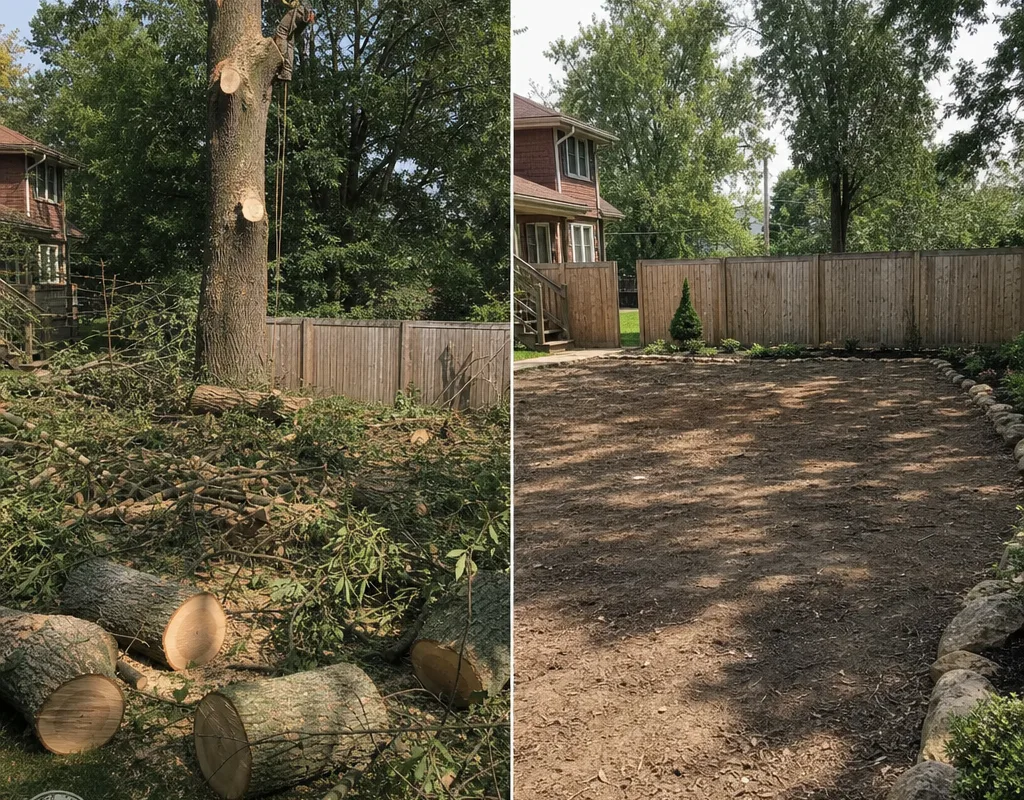
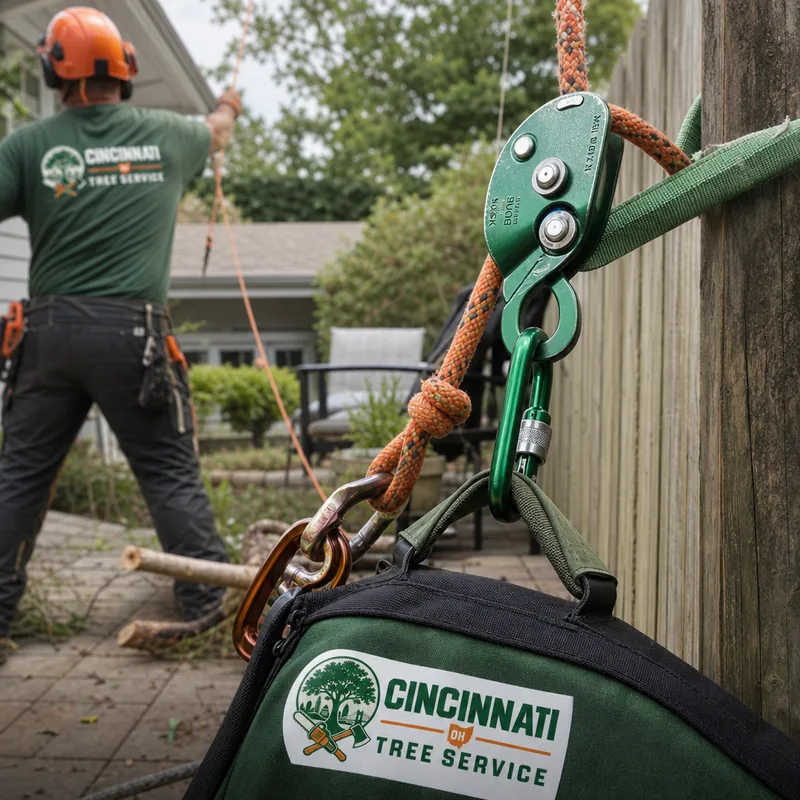
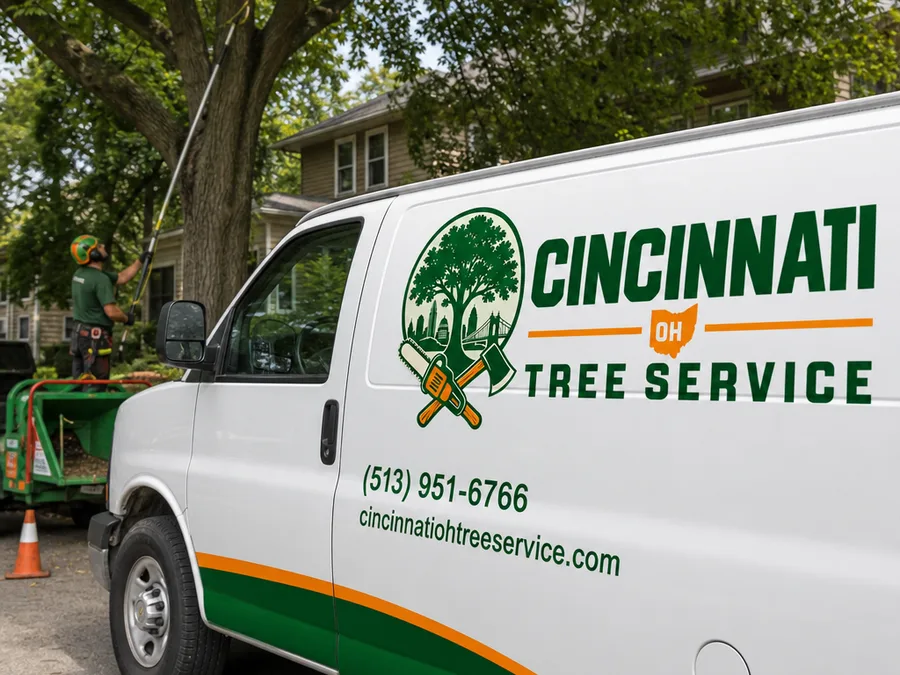
Yes, most tight-space jobs are handled by sectional removal, where limbs and trunk sections are cut into manageable pieces and lowered with ropes. This method is common on Cincinnati lots with limited drop zones because it lets us control where each piece lands instead of relying on a full felling cut.
Sometimes you do, depending on where the tree sits and whether your neighborhood has rules through an HOA or historic district guidelines. The safest approach is to confirm property lines and any local restrictions before scheduling, especially if the tree is near a sidewalk, street, or shared boundary.
We plan the cut so lines are treated as a strict hazard boundary and pieces are rigged away from them. If the tree is touching lines or you are unsure what is energized, the job needs coordination around that hazard rather than attempting risky cuts close to the service drop.
Yes, haul-off and cleanup are typically included as part of a complete tree cutting job, and we confirm details in the written scope. If you want some or all of the wood left on-site for firewood, we can usually do that as long as we agree on where it will be stacked.
Many single-tree jobs are completed in one visit, often within a few hours, but time depends on tree size, rigging needs, and access for moving material out. Trees that must be dismantled carefully over structures or in cramped back yards can take longer because the work is done in smaller, controlled steps.
Yes, but storm-damaged trees require a more cautious plan because broken limbs and hung-up sections can be under tension or trapped in other branches. We assess where the load is, choose safe cut points, and use rigging to prevent sudden shifts while the tree is being taken apart.
Tell us what you are seeing on the property and when you need the work done. We will review the tree and property conditions, explain the safest cutting approach, and provide a written scope that covers removal and cleanup.